

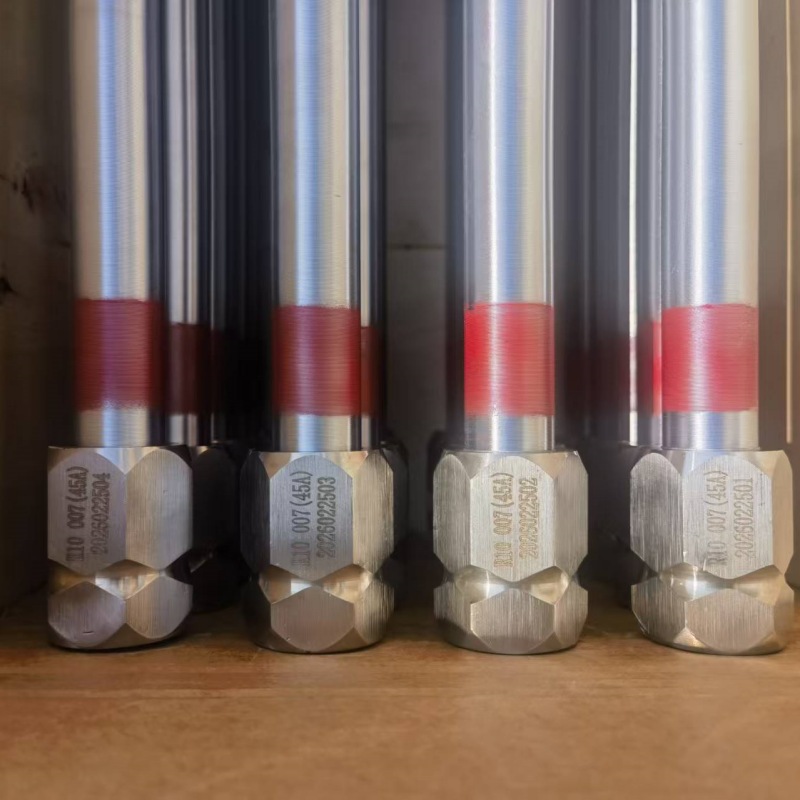
Volumetric Metering
Grooved metering rod (including wire-wound bars and extruded bars) primarily operate on the principle of volumetric metering. During the coating process, the substrate (such as paper or film) passes through a coating roller and is coated with an excess amount of coating liquid, after which it passes through the metering bar. The volume of the metering rod’s grooves determines the amount of coating liquid that can be retained on the substrate’s surface, while excess liquid is scraped off. Therefore, the wet film thickness is primarily determined by the shape, depth, and width of the grooves, resulting in a relatively stable coating volume that is less affected by coating speed¹⁶.
Hydrodynamic Metering
Smooth rods utilize the principle of hydrodynamic metering. The coating liquid forms a hydrodynamic force in the pressure zone between the smooth metering rod and the surface of the soft roller (typically a rubber or polyurethane roller). The coating amount depends primarily on the pressure applied by the metering rod and the diameter of the metering rod. Higher pressure results in a thicker coating; a larger diameter also increases the coating amount accordingly. This principle is suitable for high-viscosity coatings or coatings requiring extremely high smoothness