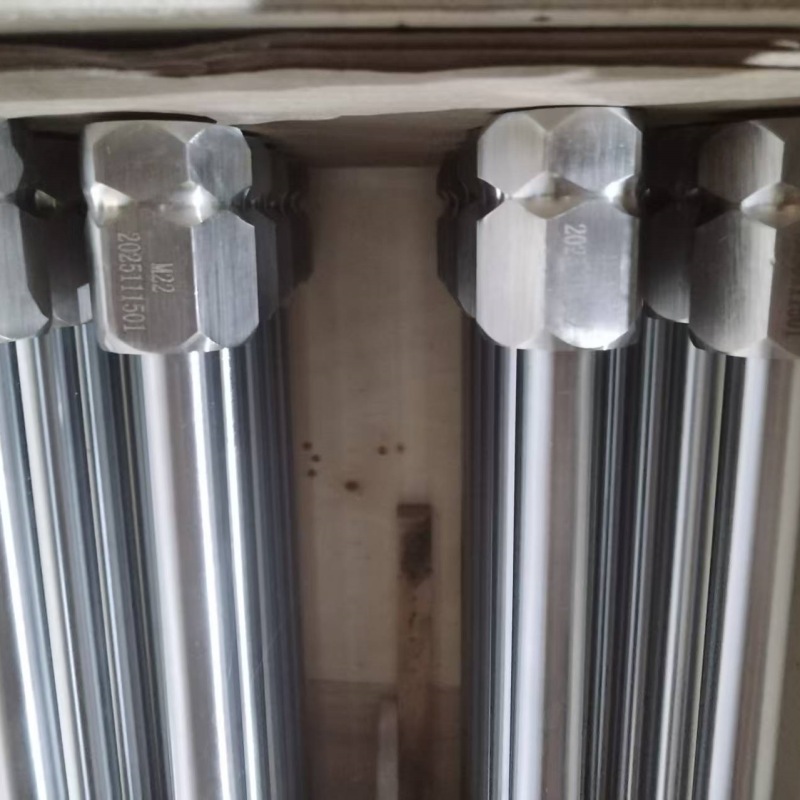

In addition to technical requirements, users often have another question: Which is better—the wound-wire type or the extruded type? Objectively speaking, no manufacturer can provide a comprehensive, accurate, and unbiased evaluation of its own products. Through experimentation, we have found that the two types are interchangeable in terms of leveling, precision, and the ability to produce a complete film layer.
From a technical standpoint, the advantage of extruded coating bars is that they eliminate the risk of wire breakage and are easier to clean. The advantage of wound-wire coating bars is that they more strictly adhere to the Mayer bar testing principle. Since the mechanisms for forming the coating groove differ between wound-wire and extruded types, the actual coating volume applied during experiments may vary. Therefore, when choosing between wound-wire and extrusion-type coating bars, we recommend that customers primarily follow the type they have used in the past to ensure the reproducibility of their experiments.
Clearly, extrusion-type coating metering rods eliminate the possibility of wire breakage.
IV. Conclusion
Overall, extruded coating bars offer significantly better performance than wound-wire coating bars. The gradual replacement of wound-wire bars by extruded ones is an irreversible trend. Returning to the fundamentals: what is the purpose of your coating? Do you need a complete film? Or an accurate film? Or perhaps both? Precision and flatness are the essentials. Imported products use higher-quality materials in this regard and offer greater precision.
wire metering rod and grooved metering rod